
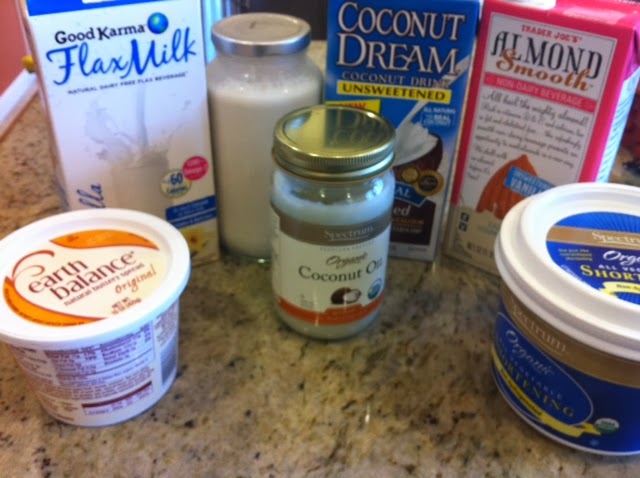
Originally posted March 7, 2014 (that’s when the photo was taken!)
Whether you eat dairy-free out of choice or necessity, you’ll find different substitutes out there based on what you’re making. I cook and bake gluten and dairy-free for my family and I. While I refer to the substitutions as dairy-free, it’s actually casein that we’re avoiding. Casein is the protein found in milk that many people cannot tolerate. Here are my top dairy-free cooking tips for how to get through it.
Drinking Milk
Please don’t believe the Dairy Board. We don’t need milk; we need calcium. Yes, milk has a lot of protein but there are other sources for that as well. There would not be so many dairy intolerances/allergies if our bodies needed milk. I am not a scientist, nor a dietician but my personal feeling is that we are probably drinking too much milk which is why, now, many of us can’t tolerate it. So, if you can’t drink milk, what is there?
Today there are many options:
- soy (but I cannot tolerate)
- rice (a little too thin for drinking)
- almond (I like it but not good for those with nut allergies)
- coconut (one of my preferred milk subs; very creamy)
- flax (not as popular but can be good; look for it in your supermarket’s refrigerated section)
- hemp (some people love this but it has an aftertaste I don’t care for)
- oat (not a bad substitute but not all oat milk is gluten-free so it might not be an option)
Since I did the original post, there are many more options like macadamia and sunflower.
This is a pretty comprehensive list. Many of these milks come in different varieties like vanilla and chocolate. Many also have added sugar. Sure it tastes better, but you might not need the extra calories. My daughter’s favorite is unsweetened vanilla flavored almond milk and she uses it in her cereal. Hopefully you can find a substitute that you like.
Also, if you are also avoiding gluten, be sure to check the label before purchasing any soy milk. Some brands contain gluten from a barley extract!
Cooking with Milk Substitutes
Drinking sweetened milk can be tasty but you don’t want to cook with it! Make sure to check the label and look for plain, unsweetened milk for cooking with 1 gram of sugar (or less). If soy is not a problem for you, it’s one of the best substitutes for milk in things like soups and creamy stews. Coconut is a close second as well. I some times make my own almond milk and recently tried it in a creamy mushroom sauce. You could not tell it was not dairy! Rice milk is very thin so you might need some extra fat or some extra thickening. You can thicken it by either cooking it down a bit or by adding a slurry (equal parts of a starch like corn and water). There are also many creative milk substitutes like cashew cream and avocados. It all depends upon what you are making. Try experimenting with some different ingredients.
Baking with Milk Substitutes
For baking, if you use a sweetened alternative milk, you might need to reduce the sugar in the recipe by 2 to 3 tablespoons. If you find the finished product sweet in anyway, it’s acceptable to reduce the sugar. As far as type of milk, I prefer to use milk substitutes with some fat or body in them so the baked good is not too dry. This is why I prefer coconut or almond milk. For things like pancakes and waffles, almost any milk will do.
Common Dairy-Free Brands for Cooking and Baking
Look for these brands for dairy-free (and usually vegan) brands:
- Daiya
- Follow Your Heart
- So Delicious
- Violife
- Miyoko’s
- Kite Hill
- Spectrum
- Did I miss any?!
Dairy-Free Substitutions for Desserts
Many traditional dessert recipes use butter so finding a good alternative is important.
Common substitutions:
- There are butter substitutes which are sold in a stick. Some are better than others. You have to test them and use what you like.
- Vegetable shortening, like Spectrum™, works really well in cakes and for frosting. I like the organic variety that is not hydrogenated. Keep it at room temperature. When I make cakes, I usually beat the butter or shortening with the sugar to get the batter fluffy. The shortening should be slightly warm to make this process easier.
- Coconut oil works really well in certain baked goods like madeleines and granola. It’s not bad in cake but can make it a bit greasy due to its low melting point. Make sure to heat it first so it is easy to measure, then cool slightly.
- For baking, you can usually substitute a vegetable oil like avocado, vegetable, or sunflower for the butter, even if the recipe does not call for melted butter. I have successfully used safflower oil instead of butter for cookies. The texture will be slightly different. Just make sure to always test your recipe.
Dairy Substitutions for Cooking
For cooking, use olive or another vegetable oil instead. For something with more mouthfeel, use coconut oil. Virgin coconut has a coconut flavor. If you don’t like that flavor, use refined coconut oil.
Check out some of my blog entries for more ideas for cooking dairy-free
Leave a Reply