
Originally posted August 31, 2018
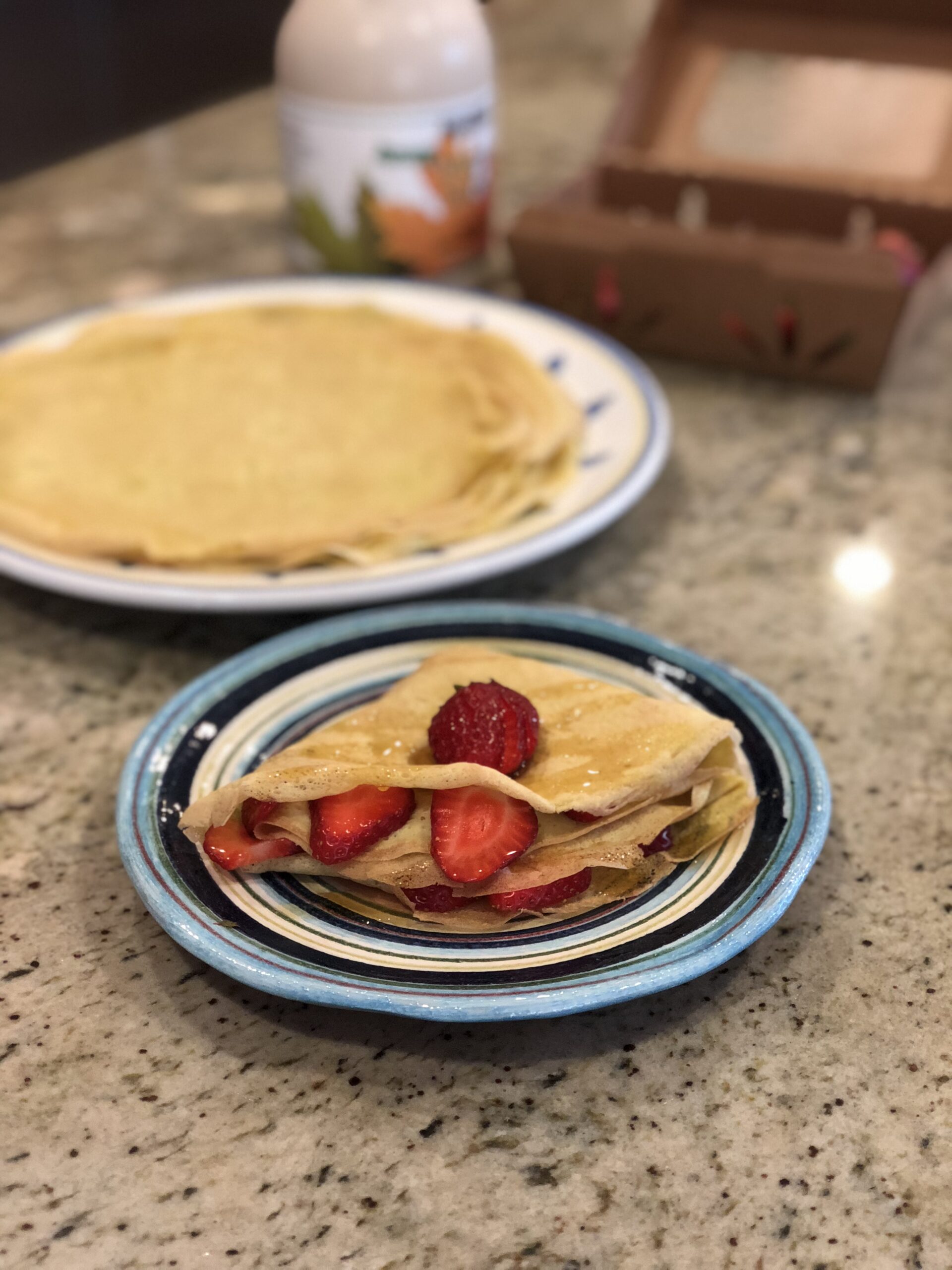
If you are trying to cut back on your carbs and sugars, try this easy and delicious recipe for paleo crepes. They are great with fresh fruit, some jam, a slice of ham and cheese, or simply on their own. Think of them as a wrap or a replacement for bread. So what sets them apart from regular crepes?
About the Ingredients
I have always liked the gluten-free crepe recipe from my book The Warm Kitchen but it’s not paleo. However, the technique is spot on. I tried a few different paleo recipes and came up with a combination of ingredients I really liked and that I felt would be easy. That is one of my mantras: recipes anyone can make.
Instead of cow’s milk, I use almond milk. Full-fat coconut can also be used; just make sure to warm it slightly in the can and shake it before it’s opened. This way the coconut fat isn’t clumpy. Want a recipe for almond milk without all of the additives? You can watch my short video here and learn how to make it. I make it every week; it is essential for my morning coffee.
Lastly, there are more eggs for structure and added protein. Otherwise, these crepes are very similar to ones you may have made with gluten. These ingredients are simple and clean: eggs, oil, milk, salt, and a combination of arrowroot, almond flour, and coconut flour.
Filling Ideas
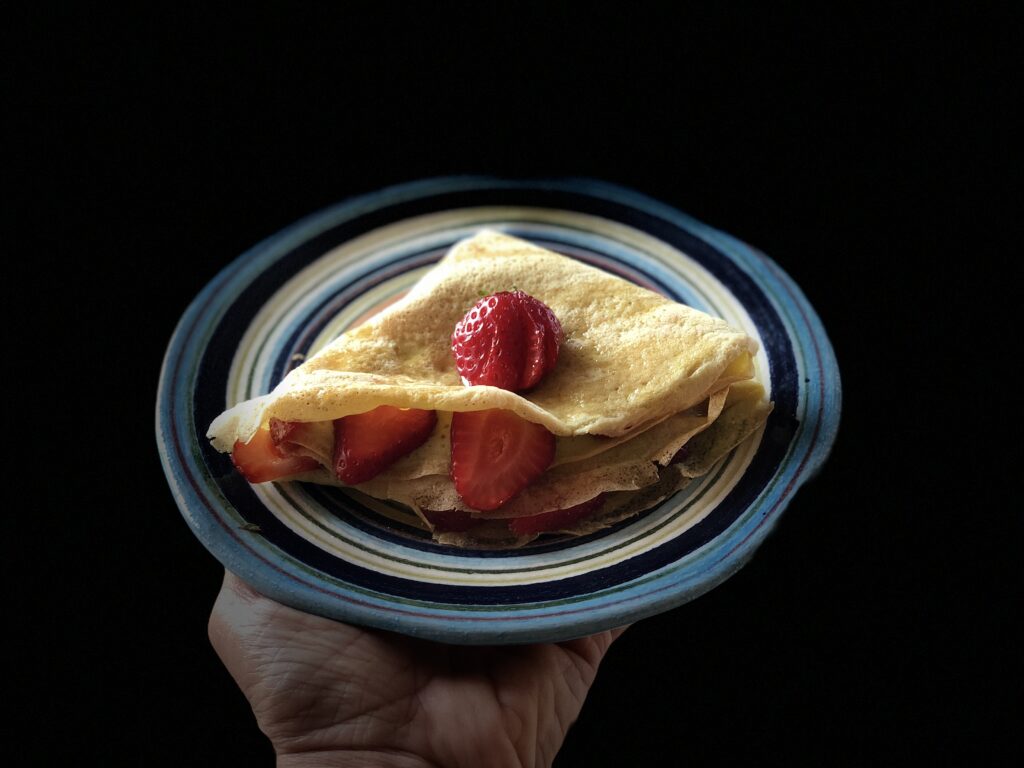
The result is a soft, thin crepe that can be filled and rolled. These paleo crepes can be served sweet (as you see above) or savory. Try fillings like strawberries, sliced bananas, sautéed apples and cinnamon, and simply Nutella. Anything is good with Nutella!
For savory breakfast crepes, try filling them with bacon and scrambled eggs. Guess what? More protein! You can also fill them with cooked broccoli or chopped spinach if you are looking for less meat and more veggies. Place that in the middle of this crepe and you have a healthy breakfast on the go.
Preparing Crepes: Before and After
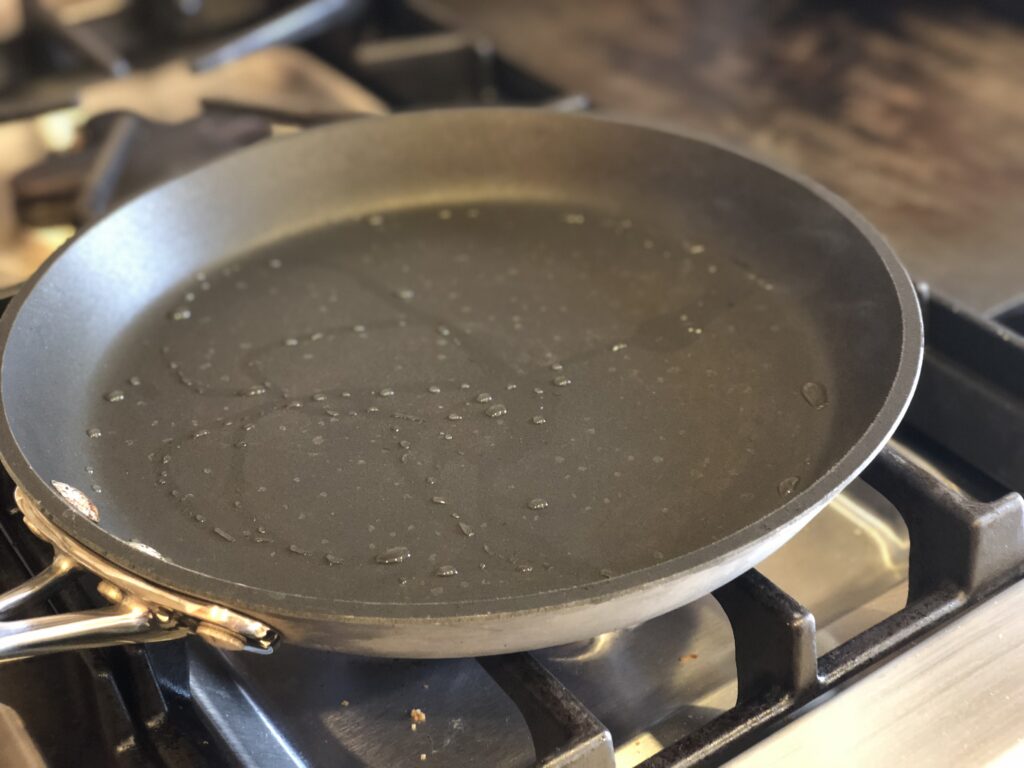
It is important to have the right pan to make good crepes. I have had the above pan for a while. The closest one to it is this one (note: this is an affiliate link; I will receive a small percentage of the sale which helps to pay for the cost of running the blog). Make sure the pan is at least 8″ in diameter; about 10″ is the best. A good pan is essential so that you can tilt the pan to make the right shape.
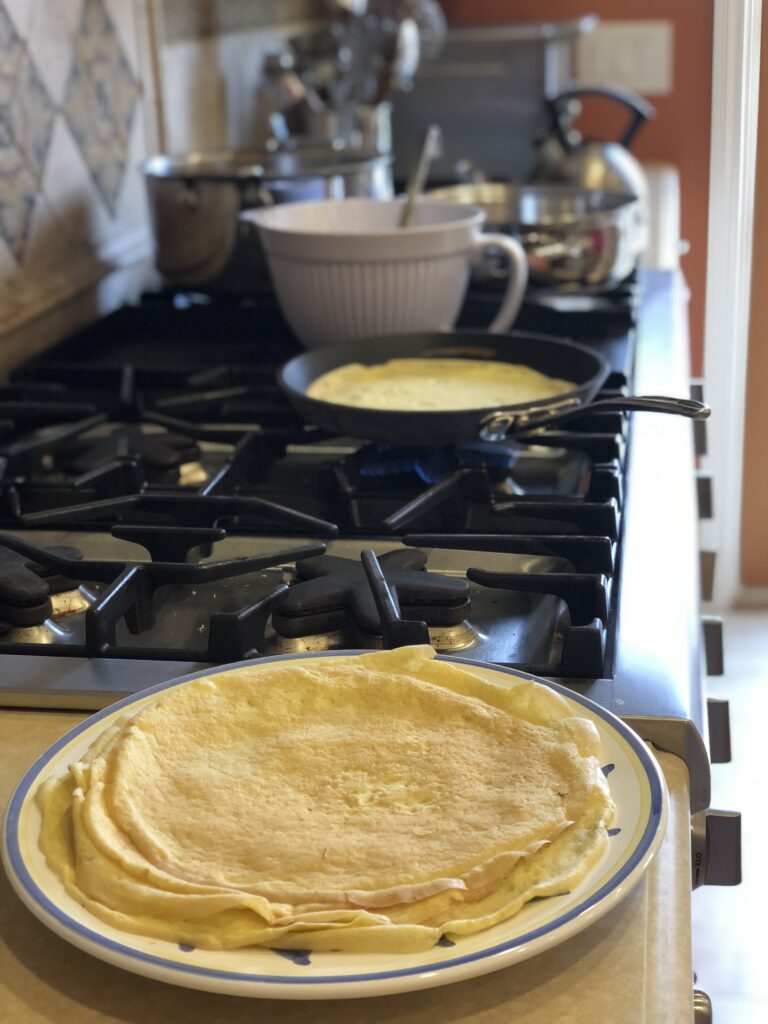
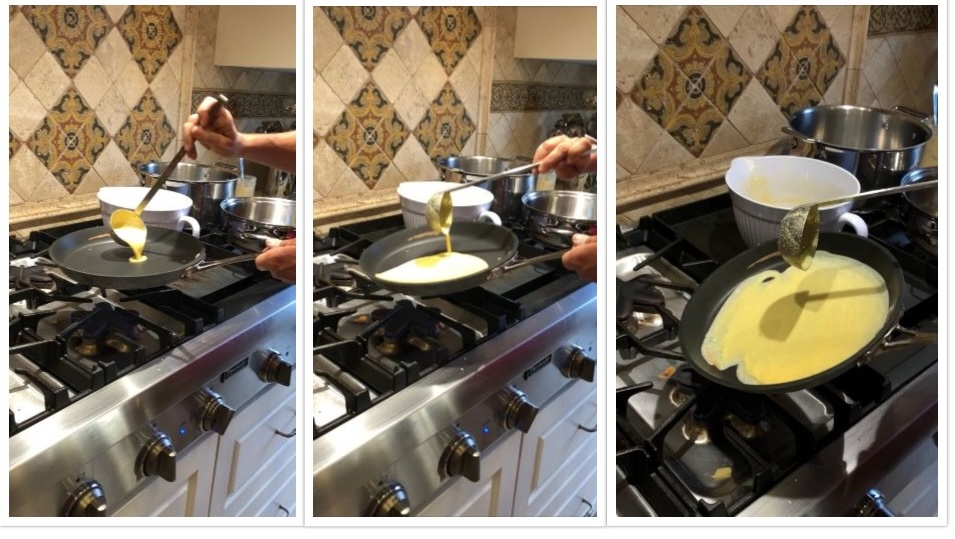
Once I’m done cooking the crepes, I lay any leftovers on top of each other and place them in a ziploc bag. I add a paper towel and then put this into the fridge. They will last about a week. So let’s show you how to make them. There are some pictures at the bottom showing the steps. Leave a comment if these photos are making you hungry (pretty much the goal).
Paleo Crepes
Yield: 6 crepes
- 3 large eggs, beaten
- ½ cup almond or coconut milk
- 1 tablespoon olive oil or melted refined coconut oil
- ¼ teaspoon kosher or fine sea salt
- ¼ cup arrowroot flour
- ¼ cup paleo flour blend (or equal parts almond flour and coconut flour)
- Olive oil for the pan
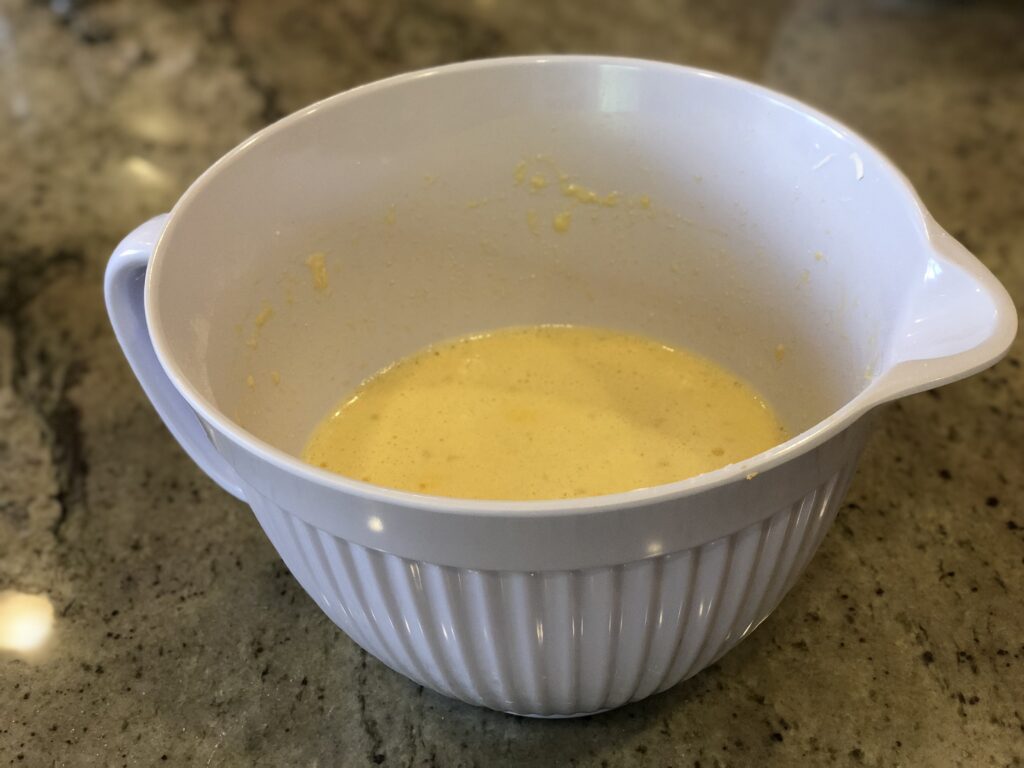
- Mix the eggs, milk substitute, olive oil, and salt in a medium bowl.
- Slowly add arrowroot and paleo flour. Mix until there are no more lumps.
- Let batter sit for 10 minutes. Batter should be thin enough to pour easily. If not, add more milk. If too thin, add more arrowroot.
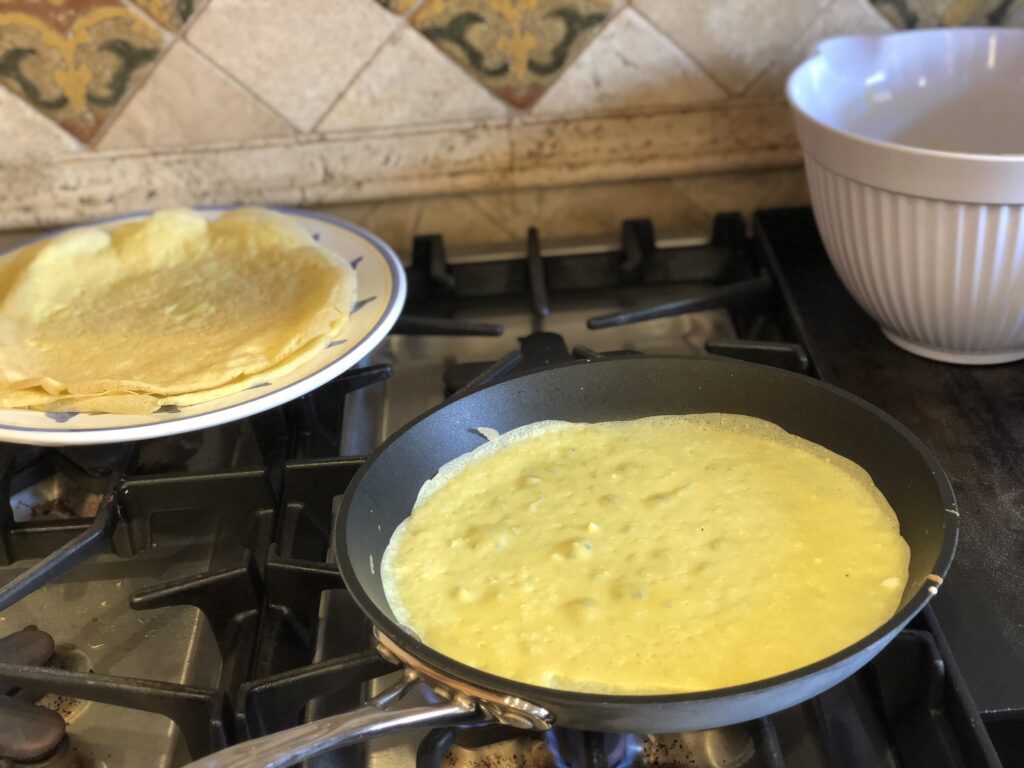
- Heat non-stick crepe or sauté pan (about 8″ – 10″ across) to slightly hotter than medium heat. Make sure the pan is hot; this is key to a good crepe. Add a small amount of olive oil to the pan.
- Holding the pan with one hand, pour about ¼ cup batter into the pan, tilting the pan so the crepe spreads to cover the bottom. Cook for about 30 – 40 seconds, flip with a plastic spatula then cook about 20 – 30 more seconds.
- Remove and place on a plate. Repeat.
- Once cool, crepes can be placed flat in a plastic freezer bag with a piece of paper towel on the bottom to absorb oil.
Leave a Reply